
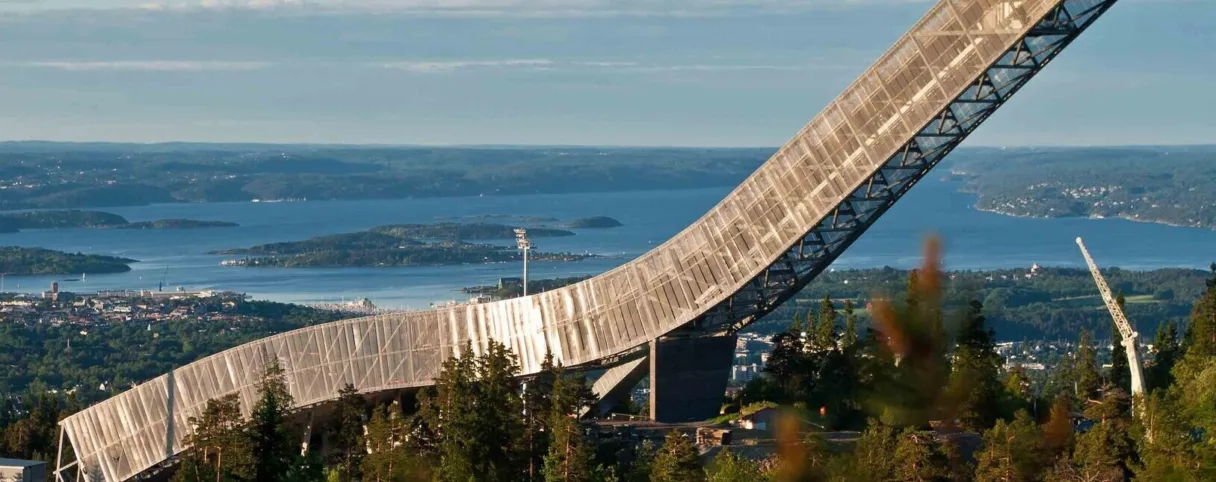
Norwegian Tourism Partners is an independent trade association for the travel industry in Norway. The association was established in 2004 with the purpose of strengthening the Norwegian tourism industry and promoting Norway as a sustainable travel destination, so that Norway can take a larger share of the international growth in tourism.
The association works to ensure that tourism is recognised as a key industry and source of employment for the future, that it is recognised as a key export industry, and to streamline the international marketing of Norwegian destinations. This shall be achieved through a collaborative effort to develop Norway as a leading sustainable destination, by improving the focus of Innovation Norway’s support measures in collaboration with the industry, and by enhancing the visibility and impact of the Norwegian Travel Industry Association in key channels. The association aims to be a unifying and influential player in the tourism industry.
The members of Norwegian Tourism Partners account for a significant proportion of international tourism business in Norway. The association’s membership comprises the largest tourism groups, as well as destination and regional organisations. The member companies employ approximately 39,000 people across the country, and just over 145,000 people in Norway and internationally. The association represents the full spectrum of the Norwegian tourism industry, including accommodation, catering, transport by land, sea and air, activities and attractions, marketing, as well as destination and regional organisations.
Organization and management
Norwegian Tourism Partners is organised as an association, in which the Annual General Meeting is the highest authority, member meetings are the decision-making body, and the Board of Directors is responsible for administrative matters.
Six Board meetings and three member meetings were held in 2025. The Board assesses that the organisation’s structure was appropriate throughout the year and a provided a solid foundation for achieving the association’s objectives, members’ interests and strategic priorities.
Development of the tourism industry in 2025
Tourism is an important industry for Norway. The industry contributes to population growth, employment and local value creation throughout the country, creating jobs in both urban and rural areas. The tourism industry generates significant local tax revenue and also serves as an important platform for inclusion in the labour market. The industry is therefore of great importance, not only economically but also socially.
At the same time, tourism is a labour-intensive industry with consistently low margins. The industry operates in a high-cost country and competes in an international market characterised by fierce competition and rapid change. The Board notes that the tourism industry remains only marginally integrated into Norway’s overall industrial and export policy, and that public policy measures and regulatory frameworks are not sufficiently tailored to the industry’s structure and needs.
According to Statistics Norway’s satellite accounts, the tourism industry employed approximately 182,900 full-time equivalents in 2019, i.e. 7.4 percent of the total number of full-time equivalents in Norway. Total tourist spending that year amounted to NOK 194.3 billion, of which NOK 59.4 billion came from overseas visitors. Factoring in the knock-on effects significantly increases the tourism sector’s overall contribution to value creation and employment.
At the end of 2025, there were no updated satellite accounts available for that year. The Board nevertheless points out that trends in overnight stays, transport and overall tourism activity show that, by 2025, large parts of the tourism industry were well above 2019 levels in terms of volume, and that many businesses had also returned to or exceeded pre-pandemic levels in terms of turnover and employment.
Accommodation and traffic development
Statistics Norway’s data show that 40.6 million overnight stays were recorded at commercial accommodation establishments in Norway in 2025. This is the highest level ever recorded, representing a 5.2 per cent increase compared with 2024. Of these guests, Norwegians accounted for 26.4 million overnight stays, while foreign guests accounted for 14.2 million.
Growth was particularly strong in international traffic, which rose by 14 percent compared with the previous year. The proportion of overnight stays by foreign visitors has thus risen from 30 percent in 2019 to 32 percent in 2024, and to 35 percent in 2025.
Approximately 75 percent of the overnight stays by foreign visitors were from Europe. Germany remains the largest market with just under 2.6 million overnight stays, followed by Sweden with 1.3 million. Next came the Netherlands with 985,000, the United Kingdom with 977,000 and Denmark with 896,000 overnight stays. All of these markets recorded solid growth compared to 2024.
The US continued to strengthen its position as one of Norway’s most important overseas markets, whilst Asia made a marked comeback in 2025. Statistics Norway registered 1.2 million overnight stays from Asia, a growth of 30 percent from 2024. China alone accounted for 392,000 overnight stays, 78 percent more than the previous year. Asian markets are essentially back to their pre-pandemic levels.
Oslo and Vestland counties had the highest number of commercial overnight stays in 2025, with 6.9 million and 6.2 million overnight stays respectively. They were followed by counties of Innlandet, Trøndelag and Nordland. Every county experienced growth between 2024 and 2025, with a particularly strong increase in overnight stays by foreign visitors. The proportion of foreign overnight stays was highest in Svalbard and Troms.
The hotel sector enjoyed particularly strong growth in 2025. The hotels registered a total of 28 million overnight stays, an increase of 1.4 million compared to 2024. Almost all of the growth was generated by foreign visitors. Campsites recorded 8.4 million overnight stays, an increase of 456,000 on the previous year, whilst holiday villages and hostels jointly recorded 4 million overnight stays. The Board notes that this growth is increasingly driven by the hotel market, whilst the camping and self-catering segment continues to enjoy a high level of activity.
Add to this overnight stays in private holiday homes, holiday apartments and accommodation booked on online platforms, which are not included in the standard statistics on overnight stays with commercial accommodation providers. The total number of visitors to Norway is therefore higher than that shown in the standard accommodation statistics.
Traffic growth supports the perception of a growing tourism industry. A total of 53.1 million passengers passed through Avinor's airports in 2025, an increase of 3.3 percent compared to 2024. Domestic traffic grew by was 2.8 percent and international traffic by 3.8 percent. International traffic accounted for 42.6 percent of passengers, up from 42.3 percent the previous year. The level of occupancy rose to 74 percent, which is the highest level ever recorded, both overall and for domestic and international traffic.
Rail traffic also showed a positive trend. According to the transport authorities’ report, a new record was set in 2025 of approx. 85 million train journeys; just over 3 million more than in 2024. This indicates continued strong growth in public transport, which will also have an impact on domestic travel and accessibility to destinations in Norway.
The Norwegian ski industry also reported another strong winter season. Lift ticket sales at Norwegian ski resorts exceeded NOK 2 billion for the first time in the 2024/2025 season. This is the highest figure on record and highlights the importance of winter tourism to Norway’s mountain and year-round destinations.
Norwegians’ travel patterns
Statistics Norway's travel survey shows that Norwegians made 26.5 million holiday trips in 2025, a decrease of 2 percent from the record setting year of 2024. Of these, 19.5 million were holiday trips within Norway, while nearly 7 million were holiday trips abroad. Although the level was somewhat lower than the previous year, 2025 was still the second highest level ever measured.
Sweden was still Norwegians' most popular foreign travel destination, with 1.8 million trips, followed by Spain with just under 1.4 million. Followed by Denmark, UK and Germany. The Board points out that currency conditions still have an impact on Norwegians' travel patterns, and that a stronger Swedish and Danish krone probably contributed to weaker growth in these markets than previously.
Norwegians spent NOK 188 billion on vacations in 2025. Of this, NOK 98.5 billion was spent on holidays in Norway and NOK 89.5 billion on holidays abroad. This indicates growth in total consumption, despite slightly lower volumes, and suggests an increase in consumption per trip.
Business trips, however, declined in 2025. Norwegians made 4.9 million business trips, approx. half a million fewer than in 2024. Of these, 4 million were domestic business trips, while just over 900,000 were business trips abroad. This confirms that the holiday and leisure segment remains the strongest driver of growth in the travel industry, whilst business travel and elements of the meetings and conferences market are performing less strongly.
Development trends and market assessments
The Board notes that trends since the pandemic confirm that the Norwegian tourism industry has made a strong recovery in terms of volume. 40.6 million commercial overnight stays in 2025 represent a figure approximately 15 percent higher than in 2019. This growth is largely driven by foreign holidaymakers and recreational travellers. International markets have increasingly rediscovered Norway, and most markets are now back at or above pre-pandemic levels.
The Board notes that it is especially nature-based experiences, winter tourism and strong city and round-trip concepts that are seeing the strongest growth. At the same time, trends show that it is the hotel market that is driving this growth to a greater extent than before. This points to a more internationally oriented, and potentially more profitable, growth trajectory than in the first years following the pandemic.
However, it is the Board’s view that increased volume does not automatically lead to a corresponding increase in profitability across the entire industry. Many accommodation and catering businesses are still facing high costs, labour shortages and challenging operating conditions. Margins remain tight across much of the industry, even though demand is growing.
The Board also notes that changes in travellers' preferences are creating new opportunities. According to Innovation Norway, demand for culinary and cultural experiences is steadily increasing, and tourists who prioritise such experiences generally spend more than those who mainly seek nature-based activities. This creates opportunities for increased value creation per guest, and highlights the importance of developing integrated and high-value experiences.
Norway also scores a very high level of satisfaction among visitors. The strong willingness to recommend Norway bolsters the country’s position in a market characterised by strong international growth and increasing competition. This is a key competitive advantage that it is essential to capitalize on.
Framework conditions and future challenges
The Board believes that the Norwegian tourism industry is entering a new phase, in which the focus is increasingly shifting from pure growth to stewardship, sustainability and management. Increased traffic places a greater strain on the natural environment and local communities, which highlights the need for better visitor management, clearly defined destination management and more comprehensive regulation of nature-based tourism.
Simultaneously, geopolitical instability, growing international competition and persistently high costs in Norway are causing increased uncertainty. The weak Norwegian Krone (NOK) has made Norway more attractive to foreign visitors, but this cannot, on its own, offset the high level of costs and taxes.
The Board notes that issues relating to visitor charges, accommodation and cruise taxes have become increasingly prevalent. The debate over who should pay, how the schemes should be structured and how the funds should be managed will have a significant impact on the industry’s competitiveness and legitimacy in future years.
The lack of qualified labour remains one of the industry's biggest challenges. There is a pressing need to boost recruitment and develop skills in order to manage further growth. The regulation of international online platforms and global distribution operators is also becoming increasingly important in order to ensure a level playing field and market integrity.
The Board also notes that technological developments are advancing rapidly and that artificial intelligence is having an increasing impact on distribution, marketing and the customer experience. This opens up new opportunities, but also requires expertise, flexibility and strategic adaptation.
Norwegian Tourism Partners' activities in 2025
In 2025, Norwegian Tourism Partners actively promoted sustainability as a competitive advantage, bolstered the international marketing of Norway as a destination, and encouraged more competitive operating conditions within the industry.
Building on the association's strategy and action plan, the organisation has played a significant role in lobbying the Norwegian Parliament and government. A number of consultation meetings were held throughout the year, public statements were issued, and the association has participated in hearings organised by the Parliament and various government departments including, for example, the 2026 national budget and other legislative and regulatory processes that affect the tourism industry. This includes, among other things, work related to the Act on Visitor Fees and proposals for management initiatives related to tourist fishing.
The national budget planning process is of great importance to the tourism industry, and the association has devoted considerable resources to providing input and holding meetings with political leaders and civil servants at the Ministry of Trade, Industry and Fisheries. The association has also held meetings with political parties, attended hearings in the Parliament and monitored the revised national budget.
Discussions with the Ministry of Trade, Industry and Fisheries are of a high priority, and the Board believes that the strong and trusting relationship between the Ministry and the association has been further strengthened in 2025. The association's CEO sits on the Tourism Committee of the Ministry of Trade, Industry and Fisheries.
Innovation Norway is a key support structure for the travel and tourism industry. In 2025, Norwegian Tourism Partners maintained a close and constructive dialogue with the management of Innovation Norway, particularly with regard to the implementation of the tourism strategy and cooperation on international marketing. The association's CEO sits on Innovation Norway’s strategic council for the tourism initiative.
Throughout the year, the association has maintained good relations with key politicians from both the government and the opposition, and has also been actively involved in the political parties’ policy development for the 2025–2029 period.
During Arendal Week in 2025, Norwegian Tourism Partners, in collaboration with NHO Reiseliv, Virke and Innovation Norway, organised a dedicated event attended by over 120 participants from the government, political parties, NGOs and representatives of the tourism industry. Our CEO also actively participated in several debates during Arendal Week. The Board considers that this helped to raise the profile of the tourism industry and highlight the industry's key issues in a key political forum.
Norwegian Tourism Partners has also enjoyed a good working relationship with other key organisations and has, on several occasions, served as a link between employer organisations in the tourism sector, including NHO Reiseliv, the Federation of Norwegian Aviation industries (NHO Luftfart), Virke, Spekter, the Norwegian Shipowners’ Association, the Norwegian Farmers’ Union and SMB Norway. To the benefit of our employees, the association has maintained a constructive dialogue with LO (Norwegian Confederation of Trade Unions), Fellesforbundet (the Norwegian Federation of Trade Unions) and Creo [the union for arts and culture].
Other key areas of cooperation in 2025 include efforts to secure funding for a new Travel Guarantee Fund, as well as efforts to ensure that Norwegian travel companies can operate on competitive terms when dealing with international online travel agencies (OTAs).
Our CEO has a regular column in Travel News and has taken part in a number of debates and conferences across the country. The Board believes it is important that Norwegian Tourism Partners attend key forums at which developments in the industry are discussed, and for the association to provide knowledge-based input and highlight its role as a unifying and independent organisation for the tourism sector.
Norwegian Tourism Partners is collaborating with the Norwegian Public Roads Administration on the national tourist route initiative. The CEO serves as chairman of the Tourist Route Forum, which has been appointed by the Norwegian Public Roads Administration as an advisory body for the further development of the initiative.
The association enjoys a good working relationship with HSMAI Europe. This collaboration is vital for ensuring visibility, networking and skills development within the tourism sector, as well as for making effective use of the resources within the organisations.
The association also enjoys a good collaboration with academia in Norway and Europe, both in terms of research projects and guest lectures. The CEO has, among other things, been active in the research project "Innovative Festival Tourism", which is a development project in collaboration with the Inferno Festival, Beyond The Gates and the University of Southeast Norway.
In 2025, Norwegian Tourism Partners finalised a new visual identity and logo, developed a new association website, and oversaw its implementation. The Board believes that this enhances the association’s visibility, professionalism and ability to communicate with members, public authorities, the media and other partners.
The Board’s assessment
It is the Board's assessment that 2025 was a year of strong growth for the Norwegian travel industry. Tourism activity has reached new record levels, international interest in Norway as a destination is high, and the industry as a whole is in a stronger position than it has been for a long time.
At the same time, it is clear that the industry is entering a new phase, in which issues such as sustainability, regulation, visitor management, labour, skills and competitiveness will become increasingly important. How the balance between growth, regulation and sustainability is managed will be crucial to the development and competitiveness of the tourism industry going forward.
The Board believes that, by 2025, Norwegian Tourism Partners will have maintained and strengthened its role as a unifying, independent and influential player within the industry. The association’s political lobbying, collaboration with public authorities and industry organisations, participation in public processes and visible presence in public debate has helped to strengthen the voice of the tourism sector and promote the industry’s interests.
Norwegian Tourism Partners will continue to strive to ensure that tourism develops into a strong, profitable and sustainable industry, creating value and jobs throughout the country.
Oslo, 29 April 2026
